Since the adoption of Law 95-17 on arbitration in Morocco, the country has undergone a significant reform of its legal system for dispute resolution. This law will have a significant impact on the investment climate in Morocco by encouraging the … lire la suite
The Complex Issues and Risks of Exchange Control in Morocco
- Do Morocco have exchange rate controls i?
Yes Morocco has a fixed exchange rate for the dirham. In 2018, some flexibility was introduced (a 2.5% flexible rate).
- How does it work?
Office des Changes is regulating the exchange of dirhams … lire la suite
Evolution of the legal and tax regime of the CFC regional offices following the reform introduced by Decree Law 2-20-665
The CFC regime has been strongly revised by The Decree Law 2-20-665 of 30 September 2020 and its implementing decree Decree No. 2-20-841 of 8 Jumada I 1442 (23 December 2020) to meet international standards in terms of international taxation … lire la suite
Article by the Director of Westfield in the legal journal Artemis: Compliance with Law 09-08 a necessity for companies with regard to the repressive arsenal at the disposal of the CNDP
The creation of the CNDP an imperative for morocco’s attractiveness on an international scale
The promulgation of Law 09-08 is part of the modernization of the Moroccan legal system relating to the protection of personal data in order … lire la suite
Employee representatives: Guarantors of rights and essential intermediaries within the company

In Morocco’s legislative framework, employee delegates occupy a central position as elected representatives responsible for looking after workers’ interests within companies. Regulated by Title II of the Labor Code, their main mission is to guarantee respect for employees’ rights and … lire la suite
Casablanca Finance City (CFC): A strategic gateway to the African market
Casablanca Finance City has established itself as a leading financial hub in Africa, attracting international companies thanks to an attractive and evolving regulatory framework. Designed to rival global hubs such as Dubai, CFC offers several categories of licenses tailored to … lire la suite
Employer Obligations in Case of Telecommuting Request for Medical Reasons According to Moroccan Labor Code
According to the Moroccan Labor Code, employers must pay particular attention to employees’ requests to telework for medical reasons. When an employee is declared unfit to continue his or her usual duties due to illness or accident, the employer must … lire la suite
The Apostille: A Legal Simplification for the International Recognition of Documents
By Hajar Tehhaf
In a globalized world, cross-border exchanges—whether commercial, personal, or judicial—often require the validation of official documents from one country to another. Whether it isa company wishing to establish subsidiaries abroad, a citizen applying for a visa, or the execution of an international judicial decision, the legal recognition of documents plays a crucial role. Three mechanisms are commonly used in this context: the apostille, legalization, and, in some cases, exequatur. Although they share a common goal—ensuring the legalvalidity of documents—their procedures and fields of application differ significantly. In thisarticle, we will examine these three processes in detail.
Definition and Purpose of the Apostille
The apostille is a … lire la suite

From Ideas to Assets: Navigating Intellectual Property Law
By Rima Arrach
Intangible assets such as intellectual property rights, customer data, and software now make up over 90% of the value of S&P 500 companies. In contrast, tangible assets, like real estate and equipment, represent only 10% of a … lire la suite
Artificial Intelligence: A Legal and Societal Issue for Morocco and Europe
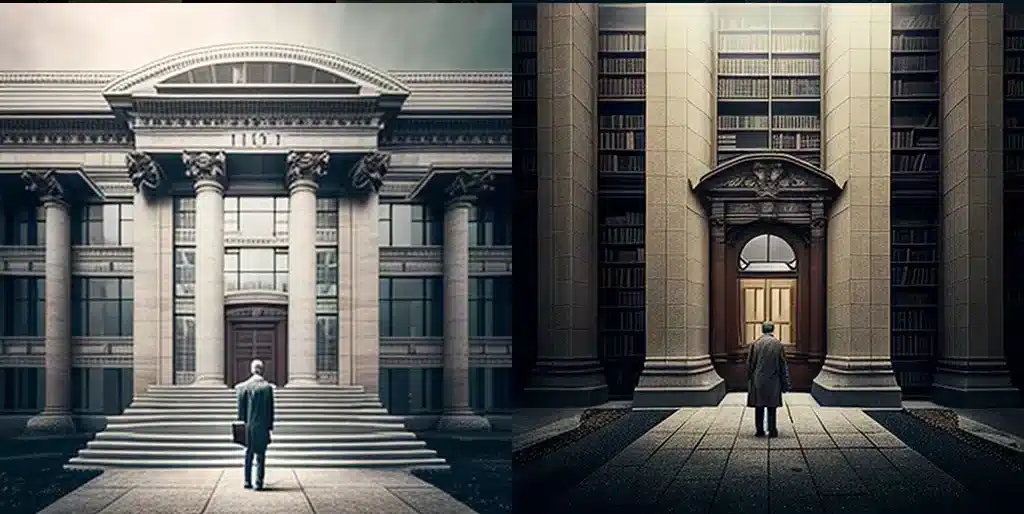
Artificial intelligence (AI), as illustrated by applications such as Midjourney , Dall-E and the famous ChatGPT, represents a major turning point in global technological evolution. While its applications promise to revolutionize various economic, social and legal sectors, they also raise … lire la suite